
Introduction
Today, in this article, we discuss Protect Crypto Assets from Hackers. The market of cryptocurrencies has expanded positively over the past 10 years. As this growth occurs, a sad truth is established that hackers become more advanced.
A total of more than 1.7 billion dollars of digital currencies have fallen in the hands of cybercriminals in 2023 alone. Such an appalling number points to the need to make crypto asset protection the priority of every investor.
No matter whether you have just bought your first Bitcoin or you have a diverse portfolio, security should not be a postponed consideration. Cryptocurrencies are decentralized, which implies that, in the event of the disappearance of funds, there is no bank to call.
Crypto can hardly be recovered after being stolen. This manual will take you through twelve proven tips on how to protect your digital investments.
The Rationality of Crypto Security

It is time to get familiar with the threat landscape before delving into a particular strategy. Cryptocurrency transactions cannot be reversed, as it is the case with regular banking systems. The hackers take advantage of this capability. They attack transactions, personal wallets, and even social engineering schemes to embezzle money.
Numerous amateurs think that the purchase of crypto on the basis of trusted exchanges will guarantee automatic insurance. This is, however, not the case. Big exchanges such as Mt. Gox and FTX have failed, including user funds. To become successful in the long term, it is necessary to take personal responsibility in your crypto security.
12 Basic Principles to Secure Crypto-assets.
Store Hardware in Hardware Wallets.
Hardware wallets are the best security standard for cryptocurrencies. These are physical devices where your privacy keys are stored offline; they are virtually resistant to online assaults. The most common ones are Ledger Nano X and Trezor Model T.
Download a hardware wallet as a physical locker to your virtual possessions. Although hackers may get into your computer, they will not get money in a different computer that is not connected to the internet. The best thing to do is to transfer any amount you are not actively trading to cold storage.
Enable Two-Factor Authentication Everywhere
The use of two-factor authentication is an important additional security measure. Always use passwords on Exchange accounts and Web wallet apps. Verification can be done using authenticator apps such as Google Authenticator or Authy as opposed to using SMS.
There are vulnerabilities to SMS authentication. SIM-swapping attack is a way to have Hackers intercept your codes. Without the need to send a code to any third party, authenticator apps get codes on your device, which removes this risk completely. Spend ten minutes today by using the 2FA to turn on all accounts associated with crypto.
Develop Hard-to-crack, Unique Passwords.
Password hygiene has a direct effect on whether you can secure crypto assets or not. The passwords should be unique, and should include at least 16 characters, and should be complex. Use upper case, lower case, numbers, and special characters.
These complex passwords can be safely produced and stored by password managers such as LastPass or Bitwarden. Always avoid using the same passwords. When there is a data breach of one of the services, unlike other accounts, hackers do not have access to your other accounts due to the use of unique passwords.
Store Your Seed Phrase in a Safe Place.
Your seed phrase is a master key to your cryptocurrency holdings. These 12-24 words can make your wallet empty for anyone who can get them. Do not keep your seed phrase in a digital form, e.g. in emails, on some cloud drive, or phone notes.
You can write your seed phrase on a piece of paper or cut it on metal plates to be fire-resistant. Keep duplicates in various safe places, such as one at home in a safe deposit box and another at the bank in a safe deposit box. Think of dividing the phrase to various locations so that it is fully secured.
Check Each Transaction with Caution.

Clipboard hijacking malware has the ability to replace cryptocurrency addresses when you paste them. Before confirming any transaction, there is always a need to verify the recipient’s address. Compare at least the first six characters as well as the last six characters.
Most seasoned investors have lost thousands due to their haste when making transactions. Spend an additional thirty seconds to check out addresses thoroughly. This basic tip can ensure that your whole portfolio does not end up in the wallet of a hacker.
Upgrade Software and Equipment.
Security patches are critical patches that are usually included in software updates. Hackers are actively using the vulnerabilities of old systems. Make your operating system, browsers, and cryptocurrency apps update themselves automatically.
Your mobile phone and computer are portals to your online prosperity. Obsolete software causes an unwarranted risk. Consistency of security patches seals security vulnerabilities that would otherwise be exploited by cybercriminals to break into your devices and steal your resources.
Use Dedicated Devices for Crypto Transactions
The question to ask is to use a different device to perform cryptocurrency tasks. This dedicated phone or laptop should not be used to do general browsing, downloading random files, or running unnecessary applications, etc. The fewer the number of programs installed, the less the attack surface.
A secondary piece of equipment may appear to be too much. Nevertheless, isolation of your crypto activities can help you a lot to avoid malware. This is a small investment that may give many serious investors their peace of mind.
Become Aware of Phishing Frauds.
Phishing is also among the most widespread forms of how hackers steal cryptocurrency. They build unauthentic sites and mail that so closely replicate genuine transactions and wallet suppliers. A single misplaced mouse-Click will ruin it all.
It is always important to directly type the address of websites in your browser. You should only visit the sites that have been marked as legitimate and do it with those bookmarks. Always avoid clicking the links in unsolicited e-mails, even when they look official. In any instance of doubt, approach the company using the established methods.
Store More than just data in your device.
Do not have all of your cryptocurrency in the same location. Dilute your holdings in the various wallets and platforms. This diversification reduces the possible losses in case some of the storage means is compromised.
Take into account investing in accordance with the purposes. Store small quantities in exchanges to act in trading. Keep most of those in hardware wallets on a long-term basis. This moderated way will help secure crypto assets and be accessible.
Research Projects Before Investing
Fraudulent projects and scam tokens are always being created in the cryptocurrency arena. Research on any project before investing. Check the credentials of the check team, audit report, community feedback, and tokenomics.
Novices become victims of rug pulls and Ponzi schemes that appear as legitimate opportunities. When returns appear too good, then they are. Having security of your assets involves preventing scams before they can stealfrom you.
Apply Virtual private networks (VPNs)
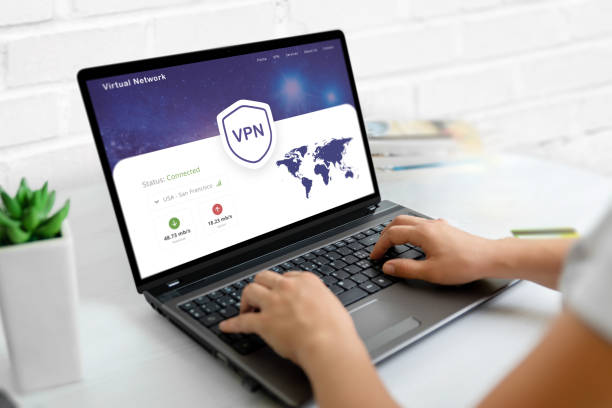
VPNs secure your internet connection and, therefore, do not allow hackers to access sensitive information. It is recommended to always use a well-known VPN service when accessing cryptocurrency site in particular on free Wi-Fi networks.
Coffee shops, airports, and hotels are places of serious security threats in the form of public networks. Hackers will be able to spy on unsecured traffic and steal login credentials. A good VPN can be purchased for several dollars per month, but it is a priceless item to guard against.
Stay Educated and Informed
The state of security in cryptocurrency is changing. New threats have been created, and old tactics are still effective. Subscribing to reliable security experts and crypto news outlets will serve as a way of staying aware of new threats.
Be members of organizations that deal with the security of online assets. Study through experience of other people and contribute to knowledge. The best long-term solution to keep crypto assets safe against more sophisticated attacks is to undertake continuous education.
Designing Your Own Security Architecture.
It is tempting to apply all twelve strategies at the same time. Begin with the basics, i.e., hardware wallets, passwords, and two-factor authentication. Add more layers with time, and you will be comfortable.
Bear in mind that security cannot be accomplished in one instance over a lifetime. Look at your practice and revise it on a regular basis. The minimal time spent on it is paid in huge dividends in safeguarding your financial future.
Take Action Today
Your cryptocurrency is actual cash and possibly life-saving money. Waiting until you have a security incident before action is taken is not advisable. Start these strategies now and do whatever will get done today.
Move your long-term positions into a hardware wallet this week. Switch on two-factor authentication in all the accounts this evening. Always make sure that you seal your seed phrase and then go to sleep. Each of the actions will bring you nearer to the bulletproof crypto security.