
Introduction
The cryptocurrency is transforming the financial world. It puts individuals in greater control of money. But there goes the risk along with this freedom. Numerous users, particularly those who are new, become victims of intelligent scams yearly.
In this article, we are going to assist you in learning about the most widespread cryptocurrency scams, their mechanics, and the most important part that we will discuss is how to avoid becoming a victim.
Why Are Cryptocurrency Scams So Common?
There is cryptocurrency decentralization. That is to say that they are not governed by any bank or power. This is excellent in privacy and independence. It is also an invitation to fraud.
Once crypto is sent, it’s gone. A transaction cannot be turned back. This is why the crypto space is so attractive to scammers; they can act very fast, unregulated, and are difficult to track.
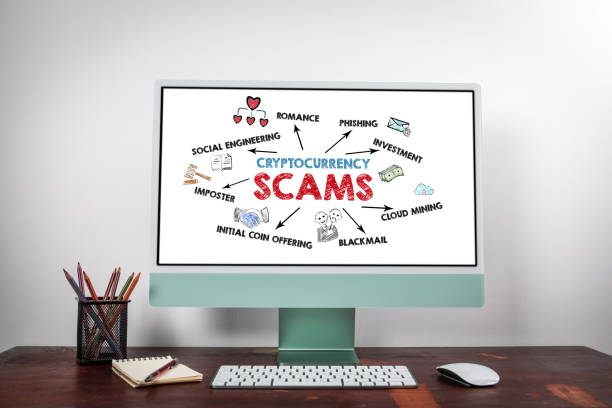
1. Phishing Scams: Fake Links, Real Losses
One of the most popular cryptocurrency scams is phishing. It is often initiated by an email or a pop-up. The message may appear to be a part of an exchange, wallet service or even a well-known crypto brand.
Users are requested to go to a link and input their login or personal information. When hacked, a crypto wallet can be emptied in a matter of seconds.
Tip to Stay Safe:
Always check the URL. Write it down in case you are not sure. Always do not respond to suspicious links or messages by clicking on links. And never forget, you will never be required to give your seed phrase by legit services.
2. Fake Wallets and Apps
Other fraudsters develop bogus wallet applications. These apps look real. They are usually rated highly in official application stores. As soon as installed, they steal the personal keys or make the users send crypto directly.
Real Case:
In 2020, a counterfeit Trezor application on the App Store of Apple deceived customers into entering their recovery phrases. Thousands of dollars were lost.
Tip to Stay Safe:
Download only wallets and cryptocurrency applications on official websites. Checking reviews twice and names of developers.
3. Ponzi and Investment Scams.
Fraudsters adore high dividends. When somebody offers to give you twice as much Bitcoin overnight, it is a scam. Always.
Such frauds frequently involve referral bonuses. That is the way Ponzi schemes become widespread. The first users can get a few prizes, whereas new investors lose all their money when the scheme goes down.
Tip to Stay Safe:
When it sounds too good to be true, then it is. Keep on reliable deals and do not use the get-rich-quick schemes.
4. Impersonation Scams
Crooks tend to use the identities of well-known crypto figures on social media. You may find counterfeit tweets that request you to send 0.1 ETH, and I will repay you with 1 ETH. Even such posts may seem like a response to actual tweets.
Others go to the extent of opening false support accounts that end up duping users into giving up personal information.
Tip to Stay Safe:
No scam influencer or business will want you to send them crypto. Disregard all the messages that promise giveaways.
5. Rug Pulls in Crypto Projects

A rug pull occurs when a new cryptocurrency project is inexplicably disappears. The group removes its site, closes all avenues, and gets away with money belonging to investors.
Such frauds are prevalent in the world of DeFi and NFT.
Real Example:
In 2021, the token Squid Game Token increased 45,000 percent in value, and then the developers vanished. Millions of dollars were lost by investors.
Tip to Stay Safe:
Research before investing. Audit a project and verify real community involvement, project audit, and public development team.
6. Social Engineering Attacks
Certain fraudsters are long-term players. They establish credibility over DMs, forums, or even video conferences. When they have a feeling of trust, they request assistance or provide confidential investment advice.
Such tricks are common in Discord or Telegram channels.
Tip to Stay Safe:
Social media: Do not leave cash with internet strangers, no matter how cordial they appear.
7. SIM Swap Attacks
This scam targets your phone. The hacker fools your mobile company into putting your number in his/her SIM card. This allows them to use your 2FA codes, as well as reset account passwords.
They are able to empty your crypto wallets and exchange accounts once they are in.
Tip to Stay Safe:
authentication Use an app such as Google Authenticator. The use of SMS-based 2FA should be avoided. Check with your mobile company and request additional security features.
8. Malware Attacks
The computer may become infected with malware and steal personal information. It can be masqueraded as a wallet, a free tool, or as a link in a suspicious email.
Malware that is particularly harmful is the clipboard hijacker malware. It is capable of replacing pasted wallet addresses – sending your money directly to the hacker.
Tip to Stay Safe:
Make antivirus software up-to-date. Do not install apps or extensions in the browser that you do not know. Confirm the address of all wallets prior to money transferring.
9. Fake Airdrops
Fraudsters frequently sell so-called airdrops of renowned tokens. They may request that you give some crypto to them to check your wallet or provide personal keys to get the reward.
Such strategies are obvious pitfalls.
Tip to Stay Safe:
Airdrops are not supposed to demand the sending of crypto or the distribution of personal keys. Only official project sites are a source of information.
10. Deepfake and AI-Based Scams

Developed frauds have turned to AI to produce counterfeit videos or voices. It is these deepfakes that are used to promote the scam by imitating the project founders or influencers.
A fake video can appear as one of Elon Musk advertising one of the crypto giveaways- avoid it.
Tip to Stay Safe:
Stay skeptical. Never trust unofficial news and reports.
Red Flags to Watch For
- Guarantees of high returns.
- Verification wallet requests via the sending of crypto.
- Personal time: urgency and countdown time.
- Unverified applications and browser extensions.
- E-mails requesting your seed phrase or key private key.
These are your warning signs. Listen to them.
What to Do If You Fall Victim to a Scam
You can do something before it is too late.
- Stop all transactions immediately.
- Report the scam. Contact the exchange or wallet provider after the scam is reported.
- File a report. to the officials and websites such as the FTC or Action Fraud (UK).
- Warn others. Share the experience to prevent other users from falling victim to the same scams.
Regrettably, the majority of crypto scam victims do not get back their money. That’s why prevention is key.
Last Things: Be Watchful, Be Wary.
The existence of cryptocurrency is here to stay. However, the more the market, the more the tricks of scammers. Regardless of whether you sell Bitcoin or you amass NFTs, it is all about awareness as your protection.
With the knowledge of these cryptocurrency scams and how they operate, you can keep your money and spend crypto with ease.