
Introduction
Have you heard of Decentralized Apps? They are altering our internet usage. These applications are not like normal applications. They are not owned by one particular company. Users’ power and privacy are stronger.
Blockchain technology is used to create decentralized apps. They belong to the Web3 revolution. This manual makes it easy to understand. You’ll learn what they are. You’ll discover how they work. We are going to discuss actual examples as well. And now it is time to begin this adventure!
What Are Decentralized Apps?
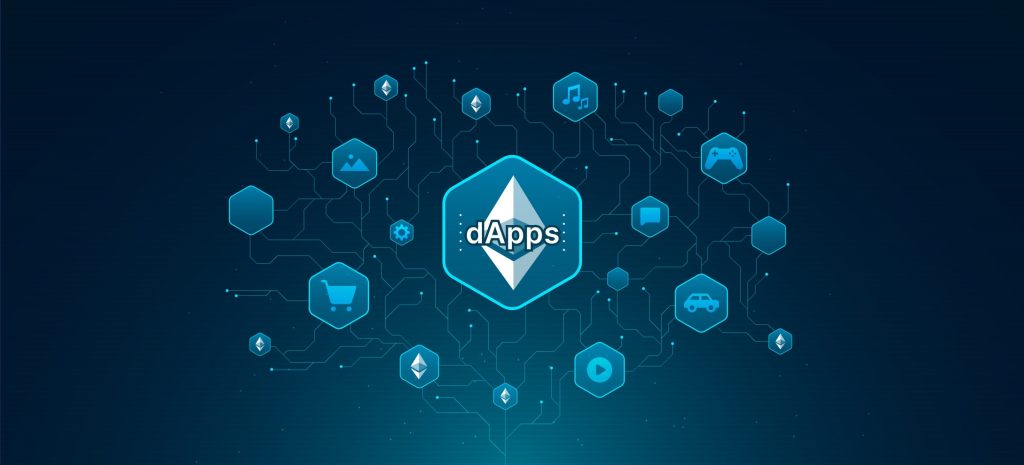
Dapps are applications built on blockchain networks. They are commonly referred to as DApps. They resemble conventional applications. They, however, do not work the same way indoors.
Normal applications take place in firm servers. Facebook is operated by the servers of Facebook. Instagram is a product of the servers of Instagram. Everything belongs to these companies.
DApps operate on the distributed networks. Several computers divide the workload. No single entity has control. This is the key difference.
Think of it like this. An ordinary one is a restaurant. All decisions are made by the owner. A decentralized application is similar to a food cooperative. Decisions are made collectively by the members.
Smart contracts are used in decentralized apps. These are blockchain automatic programs. When the conditions are obtained, they are executed. It does not require any human intervention.
The majority of the decentralized applications are based on Ethereum. However, they are also supported in other blockchains. Popular are Solana, Polygon and BNB chain.
How Do Decentralized Apps Work?
Let us deconstruct the operation of these apps. It is not as complicated as it may appear.
The Frontend
The frontend is what you see. It’s the user interface. This section resembles any ordinary application. You click buttons. You type information. You view results.
Decentralized applications employ standard web technologies. They are based on HTML, CSS, and JavaScript. All your browsers are working fine.
The Backend
This is where things are different. Ordinary applications are linked to company databases. The decentralized apps are linked with blockchains.
The logic is managed using smart contracts. They play the role of the brain of the app. They process requests. They store information. They execute transactions.
Connecting the Two
The wallets enable users to be linked with decentralized apps. The most popular wallet is MetaMask. It’s a browser extension. It automatically keeps your cryptocurrency. It approves contracts on your behalf.
By using a decentralized app, your wallet communicates with the blockchain. This happens automatically. You only have to give approvals.
Key Features of Decentralized Apps
What is special about the decentralized apps? There are a number of features that make them distinguishable.
Open Source
The code of most decentralized apps is made public. Anyone can review it. Security can be checked by the developers. This builds trust with users.
No Central Control
No company owns decentralized apps. They are usually controlled by communities. Users vote on changes. Power is distributed fairly.
Censorship Resistant
Decentralized apps can not be easily shut down by anyone. They are operated by thousands of computers. It is hardly possible to block them all.
Transparent Operations
All this is done on the blockchain. Transactions are visible. Rules are clear. Nothing happens in secret.
Token Integration
There are numerous decentralized apps, and each of them has its own tokens. These provide utility. Users earn rewards. There are governance rights that are issued with tokens.
Types of Decentralized Apps
Finance (DeFi)
DeFi apps are applications used in money. You can lend cryptocurrency. You can borrow funds. You can trade tokens.
The most examples are Uniswap and Aave. These applications handle millions of dollars. No banks are involved.
Gaming
Blockchain games enable players to own items in reality. You earn while playing. You can sell your rewards.
The Axie Infinity became extremely popular. Players in the developing nations received revenue. The game provided a true economic opportunity.
Social Media
There are also decentralized social networks. Users control their data. Feeds are not manipulated by any algorithms.
Lens Protocol is one example. It’s built on Polygon. The profiles are owned by the users.
Marketplaces
The marketplaces of NFTs are decentralized applications. Artists sell digital art. Collectors buy unique items.
The largest NFT marketplaces is OpenSea. It has billions of dollars of flow. The dealings occur in a peer-to-peer fashion.
Storage
Storage apps are decentralized and secure files. Information is distributed on numerous computers. There is no focal point of failure.
This category is powered with Filecoin and IPFS. They provide substitutes to cloud storage.
Examples of Popular Decentralized Applications.
We shall consider some well-known decentralized applications. These show what’s possible.
Uniswap
Uniswap is a decentralized exchange. You broaden and change the tokens anonymously. The fee is charged to liquidity providers. It is dealing with billions a day.
OpenSea
OpenSea controls NFT trading. Artists list their work. Buyers browse collections. All this is done on blockchain.
Aave
Aave is a lending platform. Stake a hedge and get interest. Lend against your securities. It is all managed in smart contracts.
The Sandbox
The Sandbox is an online game. Users buy virtual land. They build experiences. They earn cryptocurrency.
Mirror
Mirror is for writers. New materials about blockchain are published by authors. The audience is paid with bitcoins. Content lives forever.
Advantages of Decentralized Apps
What is the reason why you should be interested in decentralized apps? Here are the main advantages.
User Ownership
You truly own your data. You control your assets. Nobody can take them away.
Privacy Protection
Decentralized applications do not necessitate any personal data. You make a connection to a wallet address. Anonymity is possible.
No Downtime
Decentralized applications hardly fail. They are not reliant on single servers. Forces that keep them going are the network.
Trustless Transactions
There is no need to trust businesses. Smart contracts provide regulations. Code executes reliably. Math replaces faith.
Global Access
Any internet user is free to join. There are no geography limitations. All people have access to financial services.
Reduced Fees
Middlemen are eliminated. The costs of transactions tend to reduce. More value goes to users.
Issues of Decentralized Apps.
Decentralized applications are not ideal. They face real challenges.
User Experience
The majority of the decentralized applications are complex. Establishing wallets disorients the beginners. It is awkward to sign transactions. Improvement is needed.
Scalability Issues
Blockchains are limited in capacity. Popular apps get congested. Fees can spike dramatically.
Speed Limitations
Confirmations on transactions are a loner. Some apps feel slow. It is not always possible to get instant responses.
Smart Contract Risks
Bugs in code can cause losses. The hackers can use the loopholes. Security audits are necessary.
Regulatory Uncertainty
Political regimes are still trying to find regulations. Laws vary by country. Conformance poses problems.
The Decentralized Apps Usage.
Decentralized apps… are you ready? Follow these simple steps.
Step 1: Get a Wallet
Get MetaMask or another wallet. Add the browser extension. Safely register yourself. Store your recovery expression.
Step 2: Add Cryptocurrency
Purchase a bit of cryptocurrency on a stock exchange. Transfer it to your wallet. Business will require this.
Step 3: Connect to DApp
Go to an app site that is decentralized. Click “Connect Wallet.” Endorse the affiliation request. Your wallet links to the app.
Step 4: Start Using
Browse the app’s features. Experience with small transactions. Learn how everything works. Build confidence gradually.
Step 5: Stay Safe
Never share your seed phrase. Be wary of the addresses of websites. Start with small amounts. Research before investing.
The Future of Decentralized Apps.
The future of decentralized applications? The future looks exciting.
Better User Experience
Interfaces are being made easier by developers. Wallets are becoming easier. The level of onboarding will be enhanced.
Increased Adoption
Decentralized apps are being identified by more people on a daily basis. The mainstream acceptance increases. Large corporations are trying things out.
Cross-Chain Functionality
The apps will be compatible with various blockchains. Users won’t be limited. Options are enhanced by interoperability.
Real-World Integration
Decentralized applications will be linked with the real world. Supply chains will use them. They could be introduced in voting systems.
Enterprise Solutions
Decentralized apps are being investigated by businesses. Their needs are supported by private blockchains. Corporate acceptance picks up.
Conclusion
DAOs are a trend in a new era of the internet. They give users control. They remove middlemen. They establish new possibilities.
Yes, challenges exist. User experience needs work. Scalability must improve. But progress happens daily.
The knowledge of decentralized apps helps you in the future. The technology will just increase. The first to adopt reap benefits.
Start exploring today. Download a wallet. Get a basic application. Just see the difference.
The decentralized future is constructed in the present. Will you be part of it?
FAQs
Q: Are decentralized applications free of charge?
A: They are mostly free, and transactions incur a little fee, which is in the form of gas needed to process blockchain transactions.
Q: Do I require cryptocurrency in decentralized applications?
A: Usually yes. To make payment transactions and use apps, you require crypto.
Q: Are decentralized applications secure?
A: Relatively safe, with some danger. It is necessary to always research apps and utilize reliable platforms.
Q: Is it possible to hack decentralized apps?
A: Smart contracts are vulnerable. Select applications whose security audits are done.
Q: Where is it possible to locate decentralized apps?
A: Popular ones are presented in websites such as DappRadar and State of the DApps according to a category.